Dahomey 1892: the first campaign
An introduction to our first setting, and the ideas behind a quieter kind of mobile strategy game.
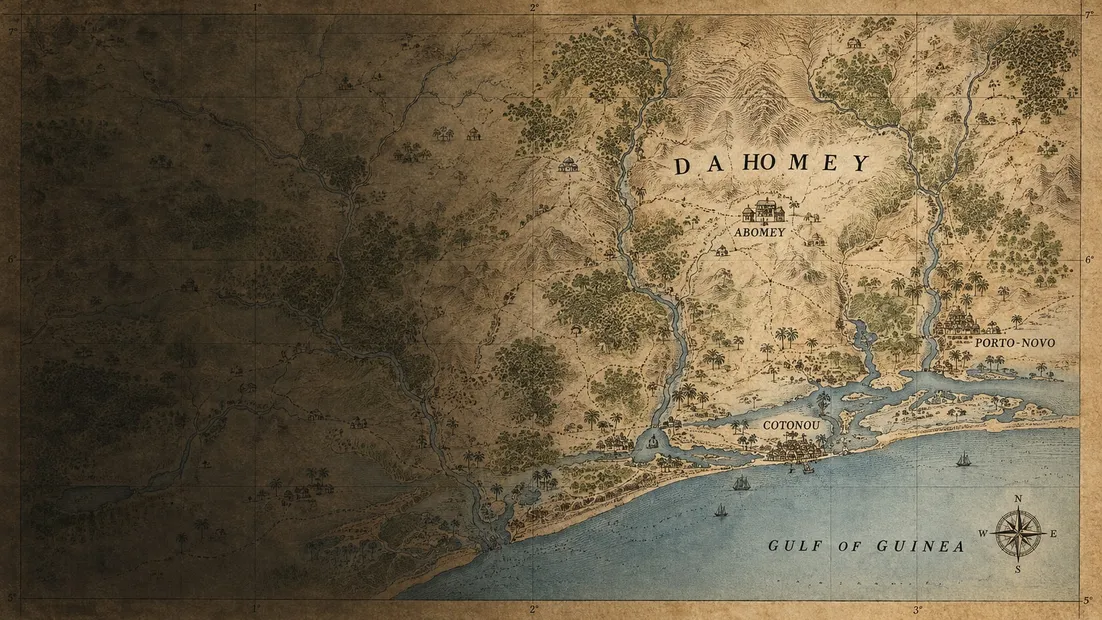
Every campaign starts with a map. Ours starts with a question: can a historical wargame feel at home on a phone without losing the decisions that make the genre compelling?
Dahomey 1892 is the first setting for CAMPAIGNS, a series of historical 2D wargames designed around the smartphone. These early notes describe our design direction. Rules, presentation, and the shape of the campaign remain in development.
A place, not just a battlefield
A historical setting should change the questions a game asks. Terrain, distance, and the limits of information should matter as much as the units on the board. Our intention is to build a campaign with a clear sense of place, where reading the map is part of making a decision.
That requires care. A map is a selective view of the world, and a wargame is a selective view of history. Neither can tell the whole story. We want the game and its accompanying notes to make that distinction clear, rather than presenting a rules system as a complete historical account.
Decisions with room to breathe
The design goal is deliberate play: enough information to make an informed choice, enough uncertainty to make that choice interesting, and time to consider the consequences.
For a phone, that also means respecting interruptions. A player should be able to return to a position and understand what matters without reconstructing a long chain of interface actions. The map, the current objective, and the state of the forces need to tell a readable story together.
An atlas in your pocket
Visually, the direction sits between a field map and a tabletop wargame. Restrained colours, clear unit markers, and a legible 2D view should keep attention on the situation. Historical texture belongs in the atmosphere; clarity belongs in every action.
The illustrations on the website are concept visuals. They show the intended mood and visual language, rather than finished gameplay or a promise of the final interface.
What comes next
This devlog will follow the decisions behind the project: how a map becomes playable, how controls translate to touch, and how historical research informs the design. We will distinguish working ideas from features that have been built and tested.
There is no release date to share yet. For now, the first objective is simple: make the map worth studying, and every decision worth making.